How to Two For One
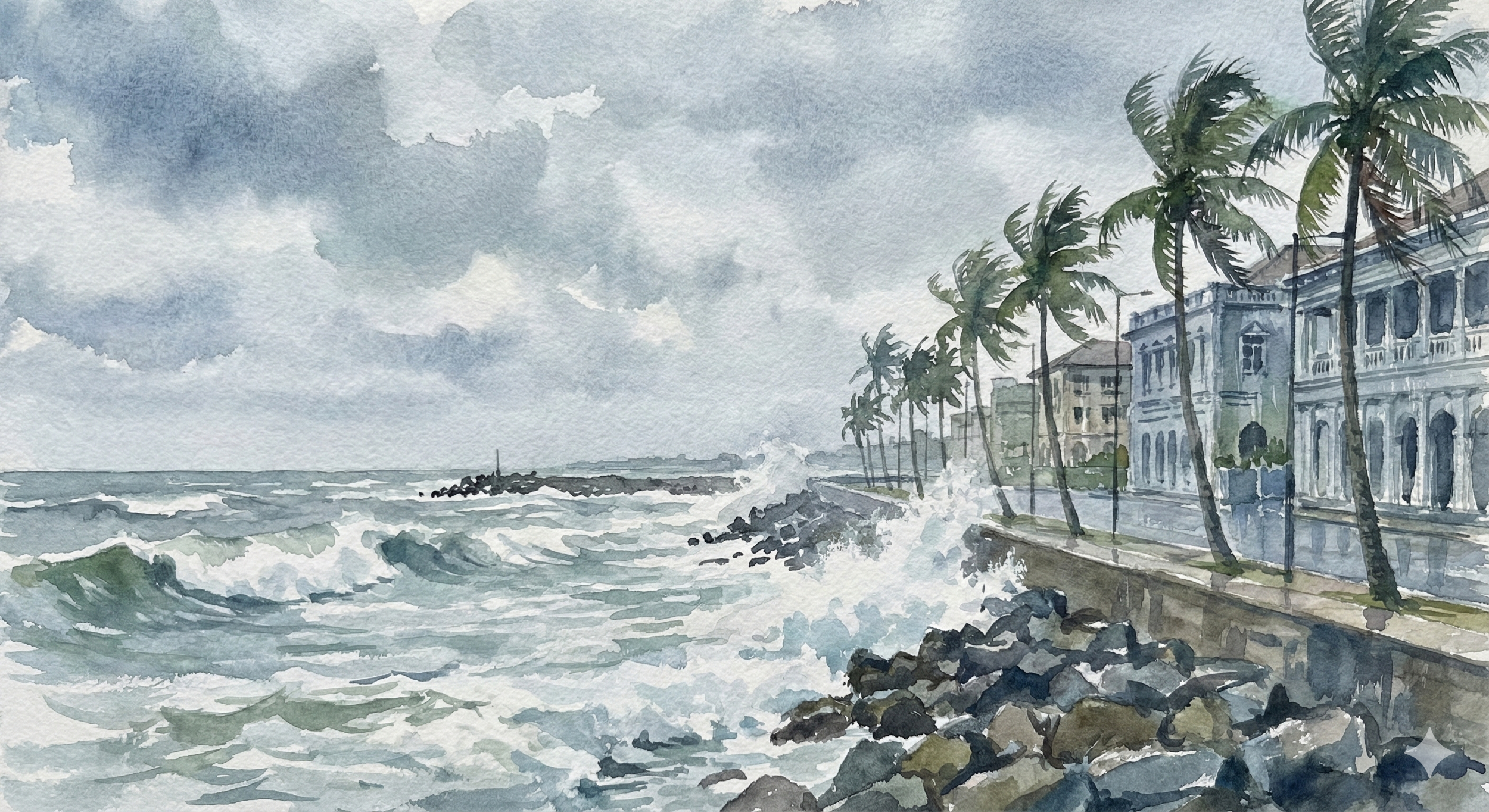
I was in Colombo, Sri Lanka this past week. Not for the cyclone or the record-setting winds that were making international news, but for a friend’s wedding.
As soon as people heard where I was, they responded with worry. Messages came asking if I was safe, if the wedding had been cancelled, if everything was a disaster. Meanwhile, on the ground, the wedding unfolded without a single issue. It poured the entire day and night, and we all embraced it. People laughed, danced, and celebrated as if the weather were just another guest. Everything went on as planned. It was beautiful in its own way.
Later that evening, I asked the groom how he felt.
He shared all the emotions you’d expect on a wedding day, joy, relief, and gratitude, but he also mentioned everything he thought had not gone according to their plan. All the small imperfections he noticed, the tiny details that slipped away from the original vision. I told him that, from my point of view as a guest, I hadn’t noticed anything out of place, and that the day felt perfect. He seemed genuinely surprised. Our experiences of the same event were completely different. He was holding onto his expectations; I didn’t have any.
This contrast continued throughout the day. After the ceremony, I spoke with the bride’s parents and asked how they experienced it. They described it as “controlled chaos,” and I could see why. For someone unfamiliar with traditional South Asian weddings, the constant drums, the sitar, the many priests guiding the rituals, the constant movement, all the guests talking, and the noise can feel overwhelming.
When they asked how I experienced it, I told them it felt like the express version. I explained that the weddings I grew up attending in India would go on for hours, often late into the night, and that I have childhood memories of falling asleep on the floor during them. Compared to that, this felt quick, quiet, and simple.
The same ceremony, two completely different interpretations, each shaped by what we had come to expect. The bride’s parents are used to short, calm, structured ceremonies. I’m used to long, loud, and endless ones. We weren’t reacting to the event itself; we were reacting to the comparison our minds were making.
Later at dinner, someone commented that the food was mild. I found it spicy. So which was it? The only honest answer is: both. It depends on who you ask. This pattern shows up everywhere once you start noticing it.
I once read about a couples therapist who would take a clock off the wall and hold it between the couple on the couch. Then she’d ask each of them what they saw. One would say, “It’s three o’clock.” The other would say, “It’s the back of a clock.” They were both describing their truth, as they saw it. They were looking at the same thing from different sides.
These experiences reminded me of something I’ve had to learn many times in my life: people will not see things the way I see them. That doesn’t make them wrong, and it doesn’t make me more right. And I won’t see things the way others do, and that doesn’t make me wrong either. It’s simply how different perspective will collide together.
Being around other people, whether a partner, family, friends, colleagues, or strangers, means living inside a world of competing perspectives. Disagreement and misunderstanding are built into the structure of relationships. There’s no way around it. But there is a way through it.
The antidote is understanding. It is the willingness to be curious about someone else’s perspective instead of judging it. It is loosening my grip on my own expectations long enough to see that someone else might be experiencing the same thing in an entirely different way.
What I’ve found is that understanding another perspective doesn’t take away from my own. It adds to it. Instead of seeing only what I see, I get to learn how someone else saw it too. It deepens my experience. I get twice the insight, twice the meaning, twice the richness. It’s a way to get a two-for-one deal in life.
Life is a constant reminder that most things aren’t inherently good or bad, chaotic or calm, perfect or flawed. They simply look different depending on where I stand. And the more open I am to that, the easier it becomes to move through the world with less friction and more ease. The thing doesn’t change. But my experience of it does.
And that is how I learned to two-for-one.